Steam distillation
Steam carries volatile aromatic constituents from botanical material into a condenser. The collected distillate can separate into an essential oil and an aqueous phase: the hydrosol.
Explore the lavender study →
Botanical extraction and small-scale fragrance research, grounded in practical chemistry and curiosity about scent.
Explore the work ↓PMW Perfumum is an independent practice led by Paul Watts, exploring botanical extracts and the chemistry of fragrance materials.
Work combines hands-on extraction, separation and purification with small-scale experimental research. These pages document the developing practice through photographs of the actual apparatus and experiments.
Each technique offers a different way to explore aromatic materials, from the botanical charge to an isolated fraction.
Steam carries volatile aromatic constituents from botanical material into a condenser. The collected distillate can separate into an essential oil and an aqueous phase: the hydrosol.
Explore the lavender study →Condensed solvent repeatedly washes the botanical charge, then siphons back into the boiling flask. Successive cycles build a complex extract containing the solvent-soluble constituents.
Explore the star anise study →Lowering the pressure lowers the temperature required for boiling. This offers a route to concentrating extracts by recovering solvent; fractional distillation can also separate materials according to their volatility.
The next stage of the star anise study is planned concentration of the ethanolic extract under reduced pressure.
Follow the extraction work →Alongside botanical extraction, planned experiments explore the preparation of selected fragrance-related molecules. Reagent preparation, dry apparatus and purification form part of this developing work.
Read the research direction →Two botanicals, two approaches to exploring their aromatic character.
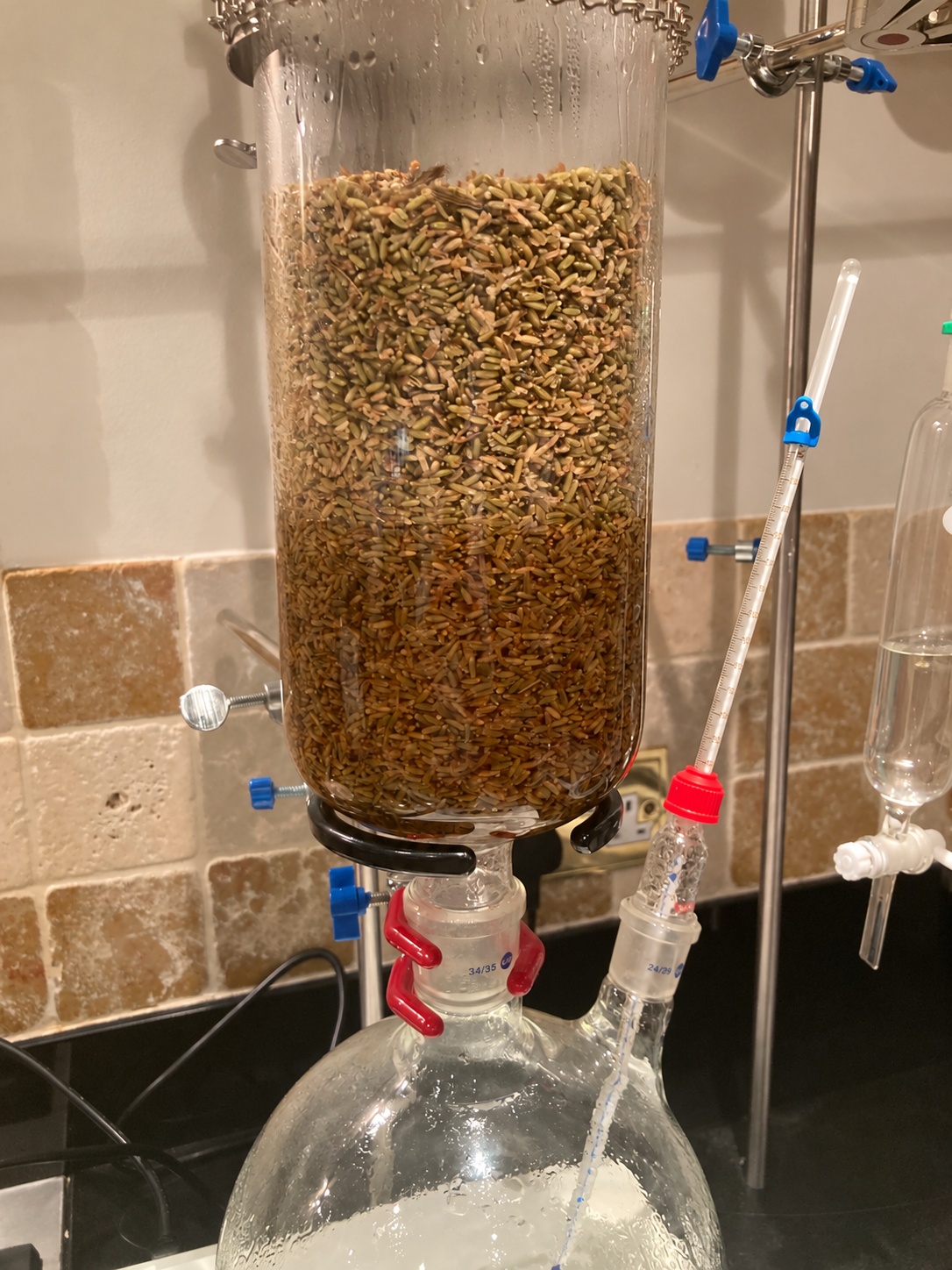
Steam distillation of lavender explores the recovery of its volatile aromatic components and the separation of the resulting lavender oil and aqueous phase (the hydrosol).
The work follows the botanical from the extraction vessel to the collected distillate, with attention to the behaviour of the apparatus and the recovered material.
The hydrosol is the water-rich distillate collected alongside the essential oil. It contains water-soluble aromatic constituents and may retain traces of dispersed oil, giving it a character distinct from the separated oil.
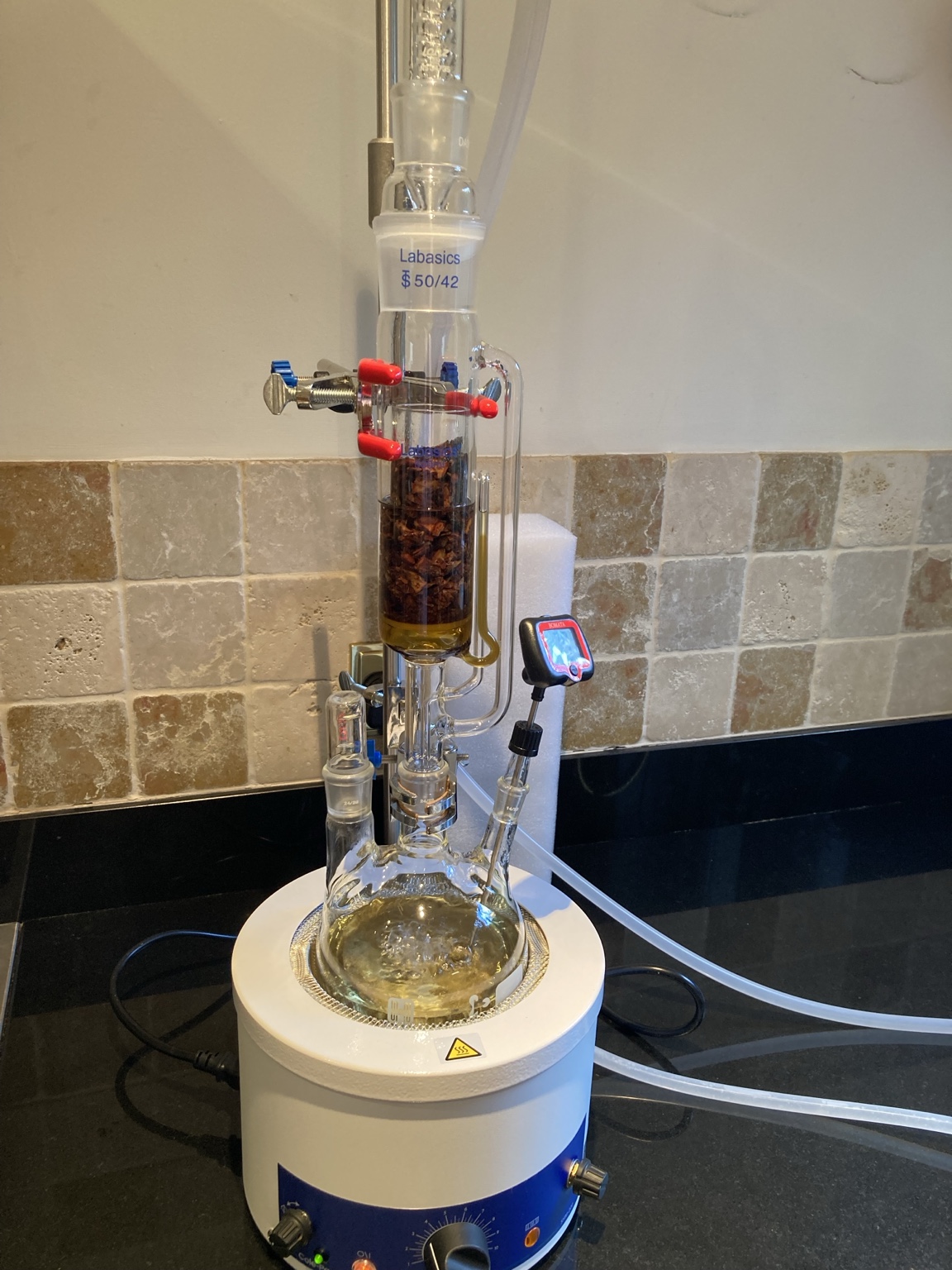
Ethanolic Soxhlet extraction of crushed star anise produces a richly coloured botanical extract through repeated solvent cycles.
This study explores extraction and subsequent concentration, with an interest in the aromatic character of star anise and its relevance to fragrance and flavour research.
Its major olfactory component, trans-anethole, gives star anise (Illicium verum) its characteristic sweet, anise-like aroma. It also occurs naturally in anise (Pimpinella anisum) and fennel (Foeniculum vulgare).
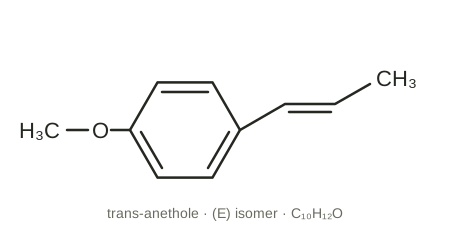
The ethanolic extract contains a mixture of botanical constituents. The structure shown identifies its key aroma compound; it does not imply that this extract has been purified to isolated trans-anethole or that its composition has been analytically measured.
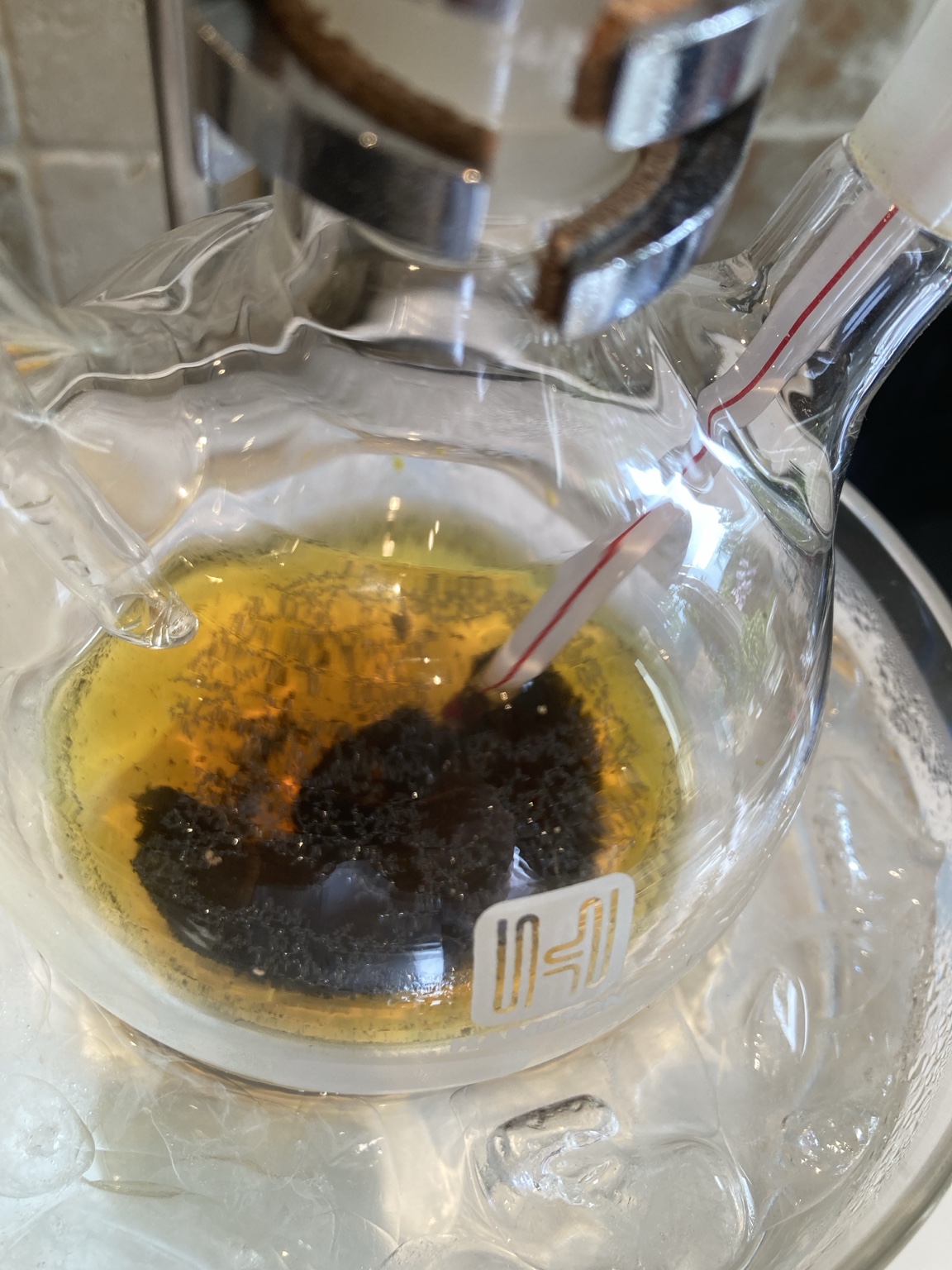
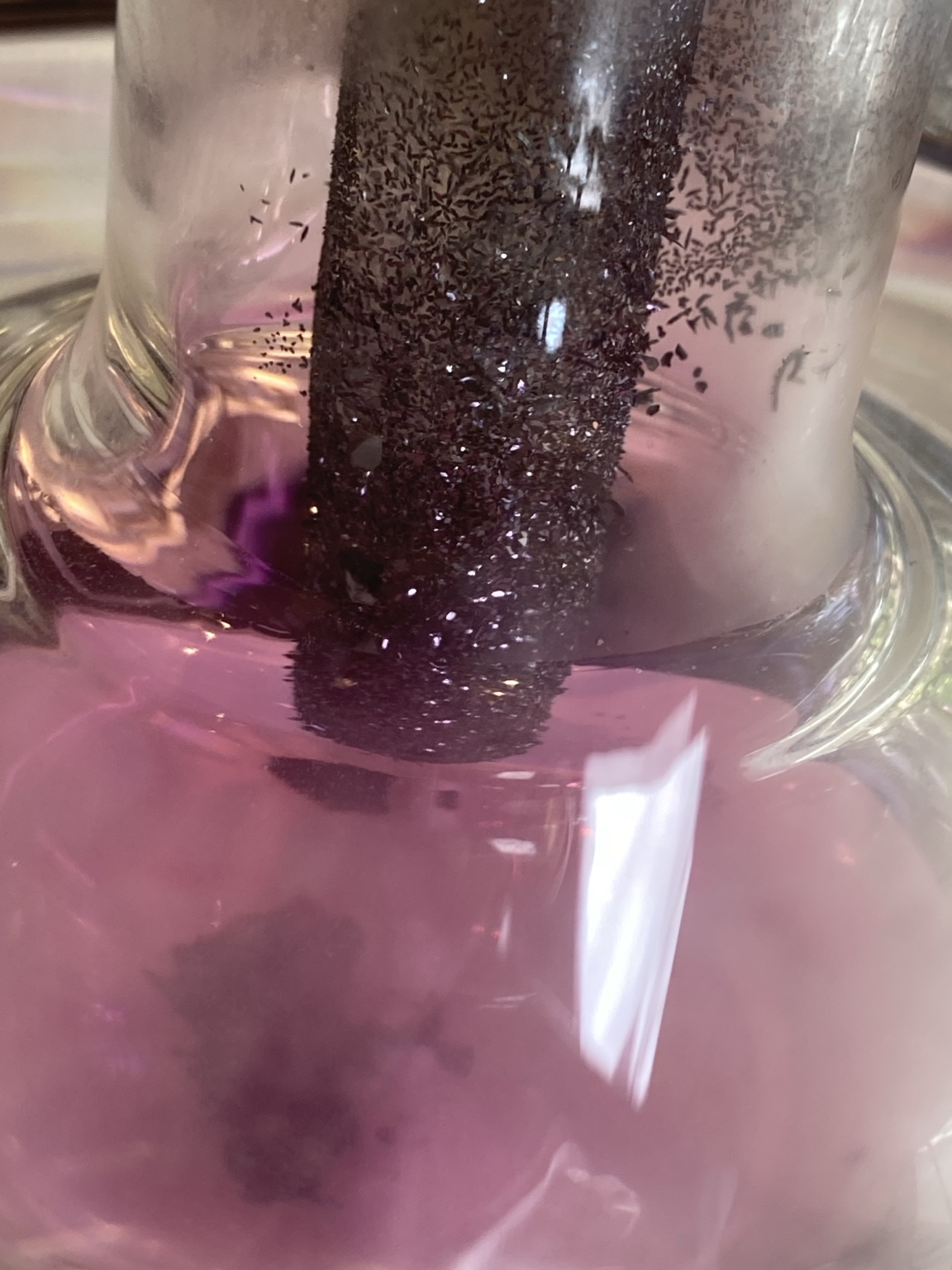
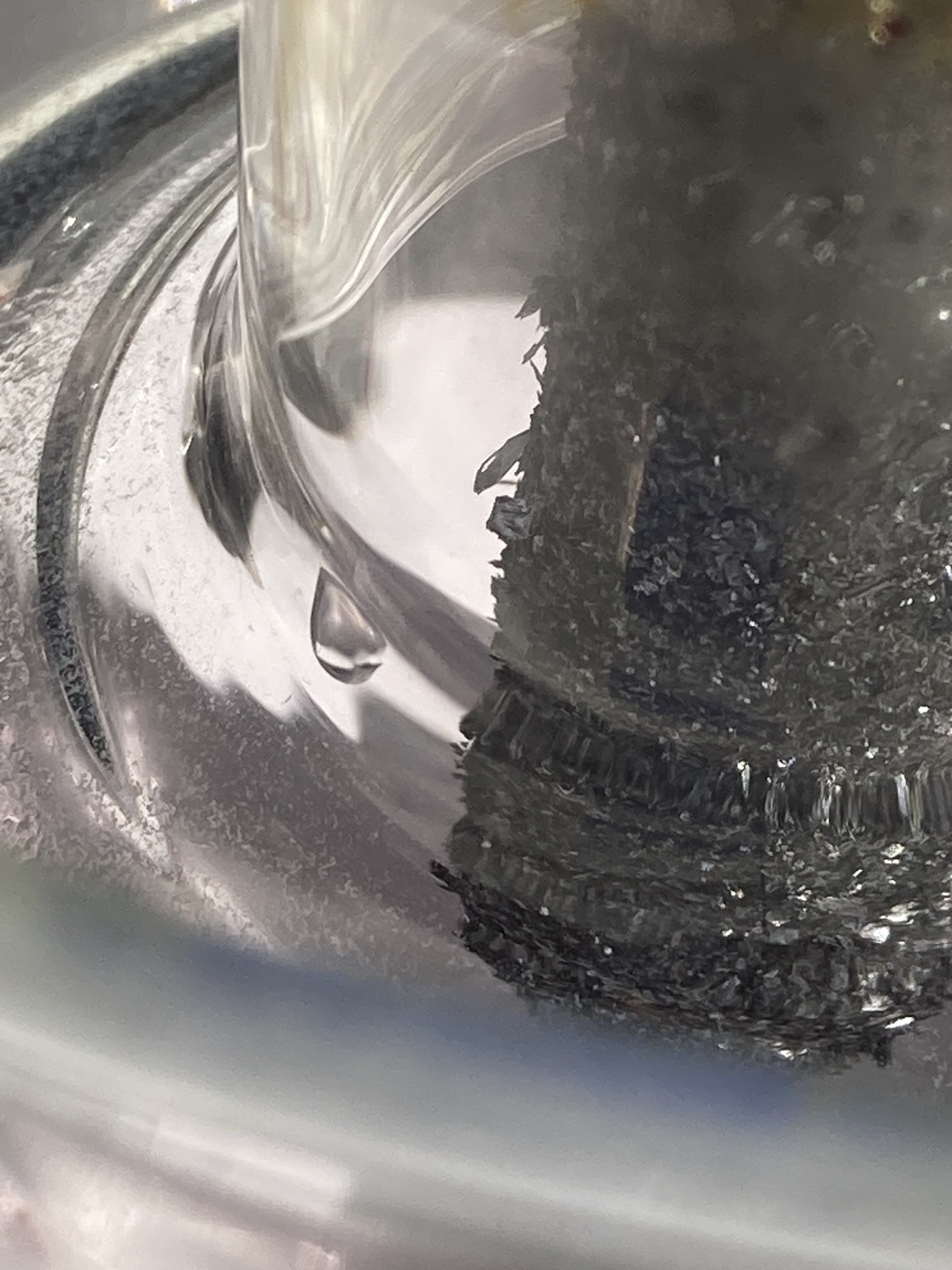
A small-scale iodine preparation followed by purification through sublimation: from an initially reddish-brown reaction mixture to dark crystalline material to violet vapour and deposits on a cooled surface.
The iodine is intended for use in initiating planned Grignard chemistry, supporting future studies of tertiary benzyl alcohols with potential olfactory interest.
Documented work · Iodine preparation and sublimationHydrogen peroxide oxidises iodide in an acidified potassium iodide solution. The developing reddish-brown colour is followed by the appearance of dark iodine crystals.
The crude iodine is separated by filtration and washed. The liquid remaining after the crystals are removed is the mother liquor; its changing colour forms another part of the experimental record.
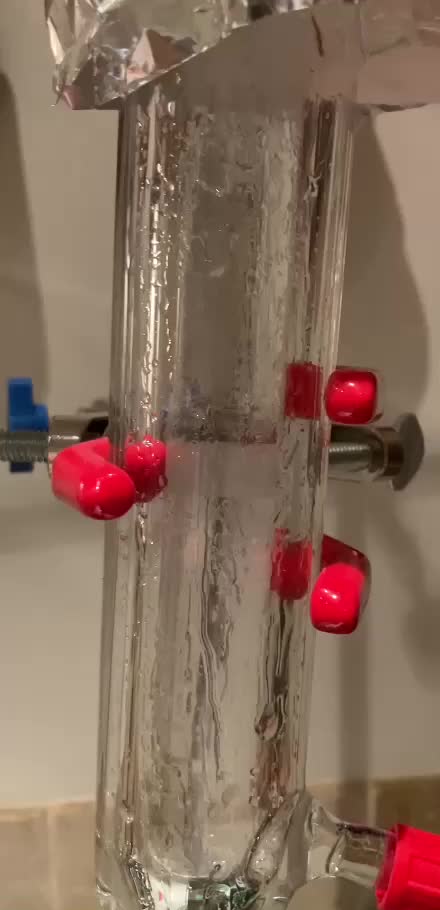
On 4 October 2026, the crude material was sublimed under reduced pressure. Iodine passed into the vapour phase and deposited as crystals on a cooled glass surface, illustrating purification through a change of phase.
Open any photograph to see the original detail. Use the arrows to move through the collection.
Planned work includes small-scale synthesis of tertiary benzyl alcohols, beginning with studies towards 2-phenylpropan-2-ol, alongside continued exploration of botanical extraction and purification.
The proposed first study brings phenylmagnesium bromide and acetone into Grignard chemistry, with iodine prepared as part of the work towards initiating the reaction. The aim is to explore the relationship between molecular structure and aromatic character.
These are developing research projects. This site presents experimental work and future directions; it does not currently offer finished products for sale.
Enquire about the practice →Research enquiries and professional correspondence.